Updated:2026.06.23
Connecting people and creating chemical reactions in the community. The unique job of a "Community Team" - WeWork Japan, Community Team
Tag
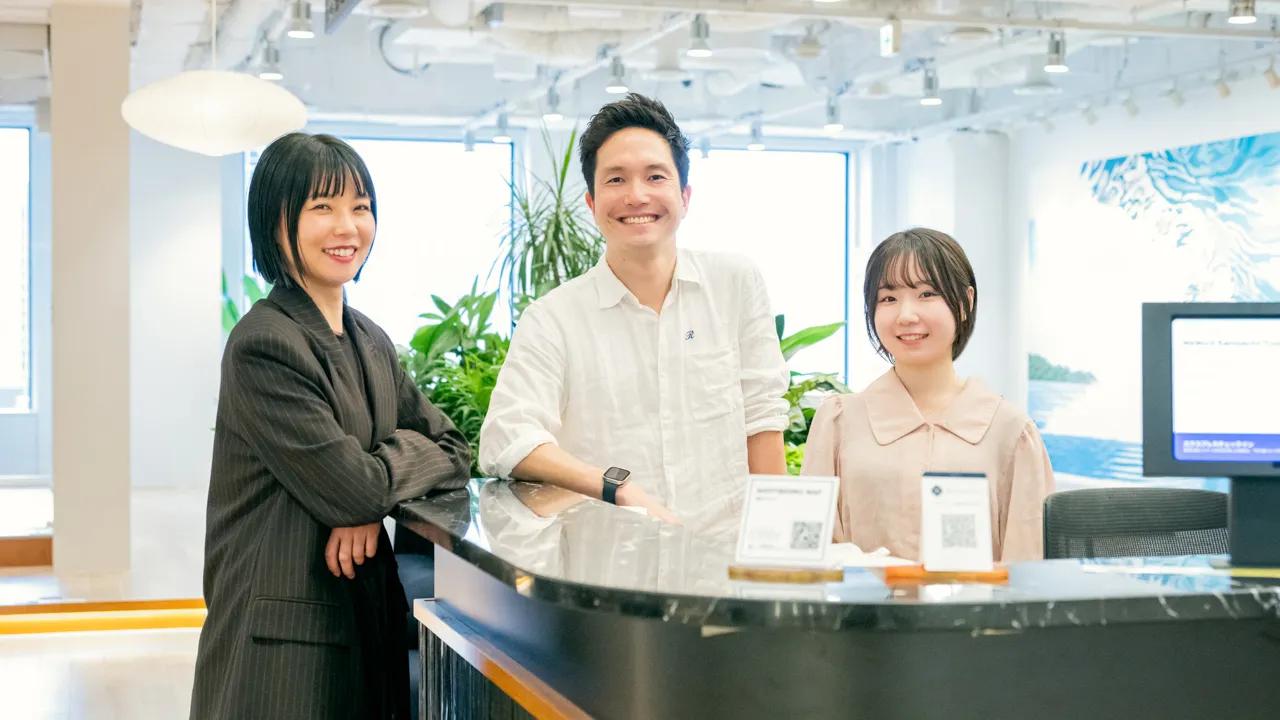
One of the major differences between WeWork and other shared offices or coworking spaces is the presence of a community team. The role of the community team goes beyond simply being stationed at the community bar (reception desk) in the main lounge to handle guests and provide daily support for members (contracted clients). They act as a catalyst to foster chemical reactions within the community by planning and hosting events that invigorate their assigned locations in a timely manner, and by creating new connections and collaborations among members. In this article, we asked three people who joined WeWork from diverse career backgrounds and are currently working as community team members at their respective locations to discuss the meaning of their roles and what motivates them.
[What it’s like to work at WeWork]
– A rapidly growing global flexible office company with ongoing new location openings and expansions.
– A culture where colleagues from diverse backgrounds respect one another and support each other’s challenges.
– A flat and open organization spanning from frontline staff to management.
– Workplaces are located directly connected to or very near major train stations at WeWork offices.
– Paid leave, maternity leave, and paternity leave are easy to take, and flexible working styles are supported through a full flextime system*.
– Received Eruboshi certification, Kurumin certification, and PRIDE Index Gold. A diverse workplace environment.
*Applies to headquarters staff.
Why we Chose WeWork: where careers intersect
──Please tell us about your current job and why you decided to join WeWork.
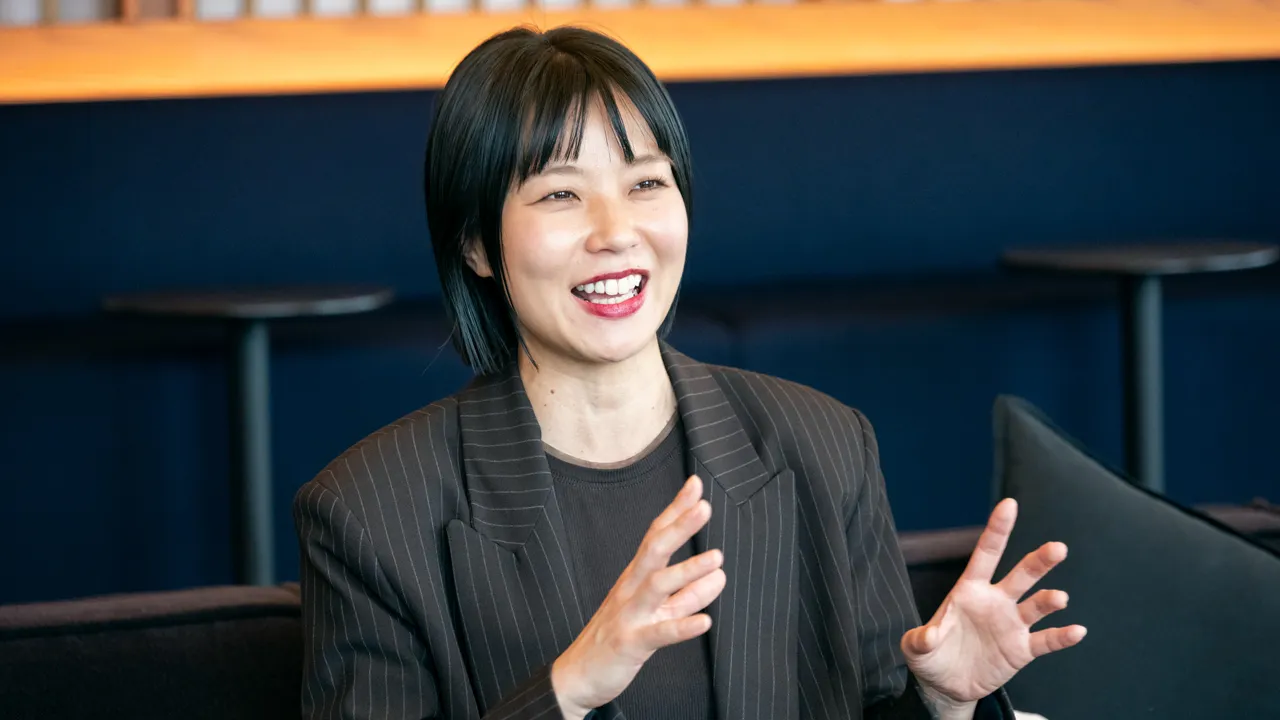
Saki:Ok let me do it first. As a Senior Community Manager, I oversee five locations: WeWork Kamiyacho Trust Tower, WeWork Shiroyama Trust Tower, WeWork Nogizaka, WeWork Ark Hills South, and WeWork Jimbocho. I joined WeWork in January 2019, and prior to that, I worked as a Visual Merchandising (VMD) manager for the Japanese market expansion of an overseas apparel brand.
I worked at that apparel brand for seven or eight years, but as I gained more experience, I struggled to imagine myself continuing in the same role. I felt it was a good time to challenge myself with a new career, so I decided to make a change. However, I did not have a clear idea of what I wanted to do next at the time; I only knew that I wanted to work in a different industry. When a recruitment agent who reached out to me via LinkedIn heard me say “anything but apparel,” they were surprised. I told them I was open to seeing any opportunity, and that was when they introduced me to WeWork.
The position I originally applied for was not on the Community Team, but during the selection process, I was told that I might be a good fit for that team. After researching it myself, I decided to take on the challenge. WeWork had just entered the Japanese market at that time, and the idea that a community could enrich both business and life felt very fresh to me. Driven by the sense of anticipation that something was about to begin, I decided to take a new step forward at WeWork. Seven years have passed in the blink of an eye, and I still find each day refreshing as I handle more locations and take on new challenges one after another.
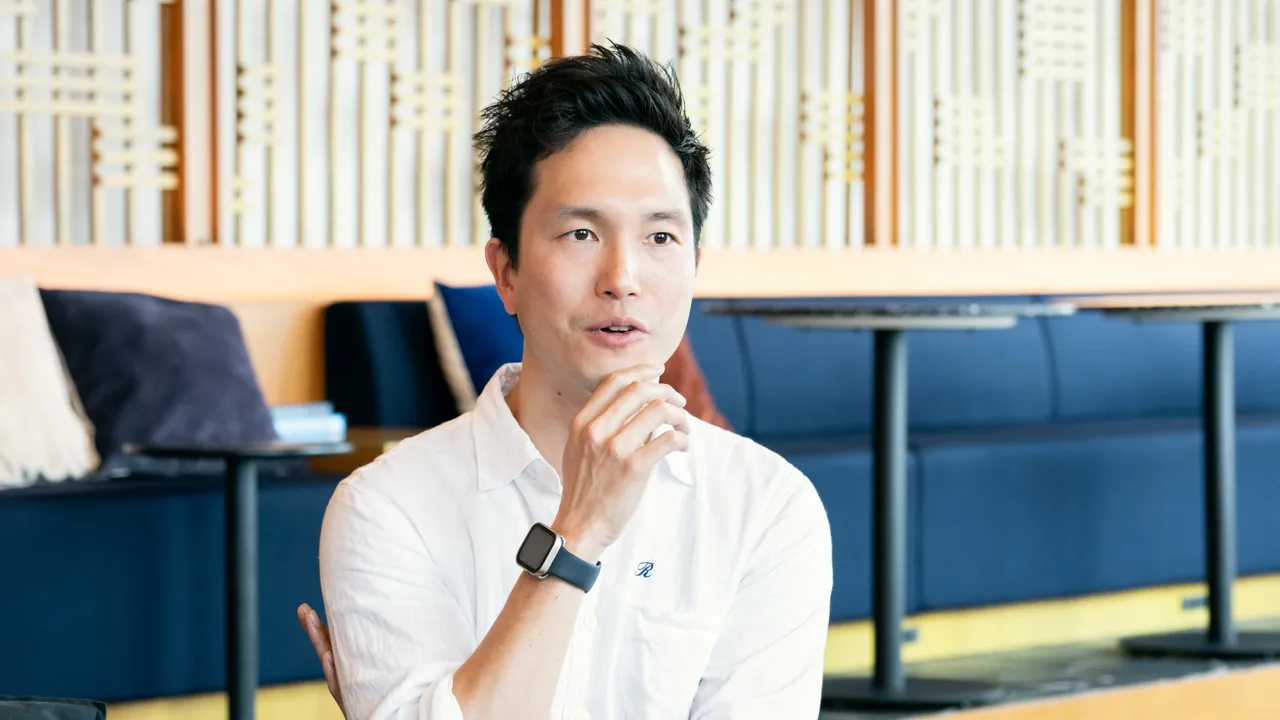

Ryuto:Like Saki, I also encountered WeWork at a turning point in my career. I joined in January 2026, so it has only been about four months (laughs). I am currently serving as the Community Lead for WeWork Ginza Six. Prior to this, I worked as a store and area supervisor for a major convenience store chain, lived in Australia and New Zealand on a working holiday, and spent six or seven years at an IT-focused recruitment agency before joining WeWork.
The reason I chose WeWork is that it sits at the intersection of my thoughts on my private life and my career. My previous job was entirely B2B, and while I found it rewarding to address the challenges of client companies, it was not work that involved being close to the personal concerns or issues of individuals. When I was considering a career change, I wrote down about 100 things that constituted my own sense of happiness at the intersection of my private and professional life, and conversely, 100 things that felt untrue to myself.
What became clear from that was that I find fulfillment and happiness in work where I can contribute to an organization while being in an environment where I can engage with individuals. I felt that the WeWork community team was a job where that could be realized. A major appeal was the feeling that by working here, I could be a giver who naturally acts for others, rather than a taker who is always looking for something in return.
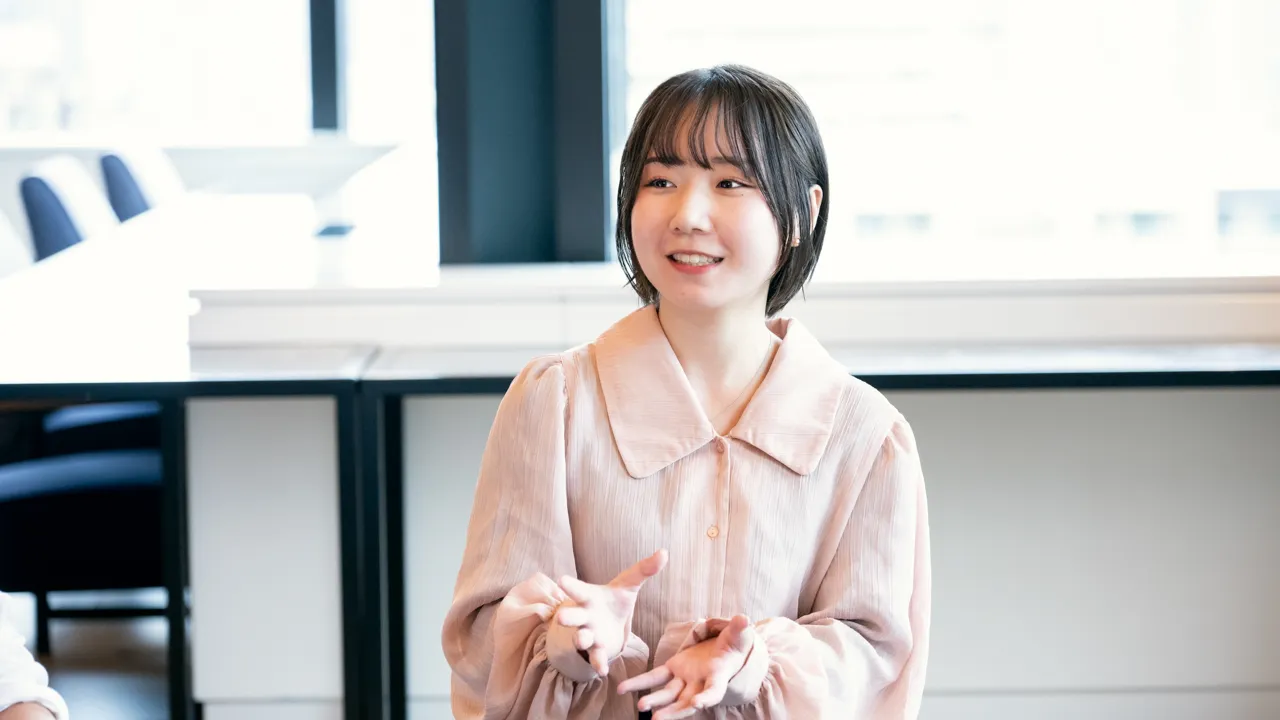
Yurina:Listening to both of you has reminded me once again of why I chose WeWork. I have been involved with WeWork for two years and two months now. I am currently working as a full-time Community Associate, but before becoming a full-time employee, I worked as a temporary staff member supporting the Community Associates. Prior to that, I was a pastry chef.
Although I had gained experience as a pastry chef, I reunited with some classmates at my Coming of Age Day ceremony after a long time. Learning that they were building new careers in various fields gave me a chance to reflect on my own future and career.
When I came to WeWork for an interview, I was impressed by the community team’s approach in an environment where various member companies are based. They were professional yet casual, and I felt a sense of personal connection from them. This made me feel strongly that I wanted to work here.
Personal growth at WeWork, where we help each other across positions and departments
──Since working at WeWork, have you felt any personal growth or a sense of accomplishment?
Ryuto:Although it has been a short time, there is one area where I clearly feel I have grown: I have become able to act with a focus on teamwork. Throughout my career, there have been situations where I had to coordinate with a team to move tasks forward, but my basic style was to work alone.
However, that does not work in the WeWork Community Team. Even for hosting an event, you cannot do it by yourself. You have to ask for help, saying “Please lend me a hand,” and build a team of colleagues who are willing to assist regardless of their position or status. If I am on the other side, I try my hardest to think about how I can be of help. The “sense of achieving a goal as a team” is something I did not have in my career until now, and I feel I have grown by realizing its importance.
Yurina:I feel exactly the same way. Everyone, once they reach a certain age, feels some resistance to asking others for help. However, the Community Team is full of kind people who reach out when they see you are struggling, and I have lost count of how many times they have helped me. I believe that WeWork’s brand purpose, “Create Your Life’s Work,” feels so real precisely because of this culture of coming together as a team to solve challenges.
What left a particularly strong impression on me was the Christmas event I was in charge of shortly after joining the company. Despite being a new hire, I was entrusted as the project owner. I navigated many challenges while preparing for it, including tasks I had never experienced before and coordinating with member companies. While I moved forward with my own ideas through trial and error, I also actively consulted with members of the Community Team and gained their cooperation, which led the event to success. Through this experience, I truly realized the appeal of an environment where each individual is given significant autonomy and is warmly supported by those around them to overcome new challenges.
Saki:What the two of them shared is, in my opinion, the very essence of what makes WeWork what it is. In my position, I visit many different locations, and I feel that WeWork spirit in the culture of working as one team, regardless of different backgrounds or skill sets. It is also not uncommon for us to work across departments to achieve goals, rather than keeping initiatives within the community team alone.
About two years ago, several project teams were launched across WeWork to tackle specific themes. Among themes such as CSR activities, I was selected to be a member of the municipal project team.
Currently, 23 local governments are utilizing WeWork, and various projects are underway to help them realize initiatives they promote, such as city promotion, corporate attraction, and public-private partnerships. Our project team provides support that leads to the advancement of policies and the creation of results, all while staying close to the unique challenges and objectives of each local government.
That said, it was not smooth sailing from the beginning. In the first year, we held several matching events with startups, but there were differences in timelines and approaches between local governments and companies, so we did not reach a level of sufficient results. Based on that experience, in the second year, instead of chasing short-term results, we promoted projects from a medium- to long-term perspective, taking into account the process of creating touchpoints between local governments and companies, as well as the decision-making processes of the local governments themselves. You could say it was a time of carefully continuing to sow seeds.
Now, those seeds have sprouted and are starting to bloom little by little. Starting from simply letting local government officials get to know WeWork, we have built relationships where it is easy to talk, allowing them to feel comfortable consulting with us and sharing local challenges, what they want to achieve, and the concerns they are facing. From there, the number of situations where touchpoints and collaborations with member companies are born is increasing. Some people have even told us that a meeting at an event two years ago was the catalyst. I truly feel that our activities, which began with “building relationships,” are finally starting to bear fruit, little by little.
Personalized communication is the key to community engagement
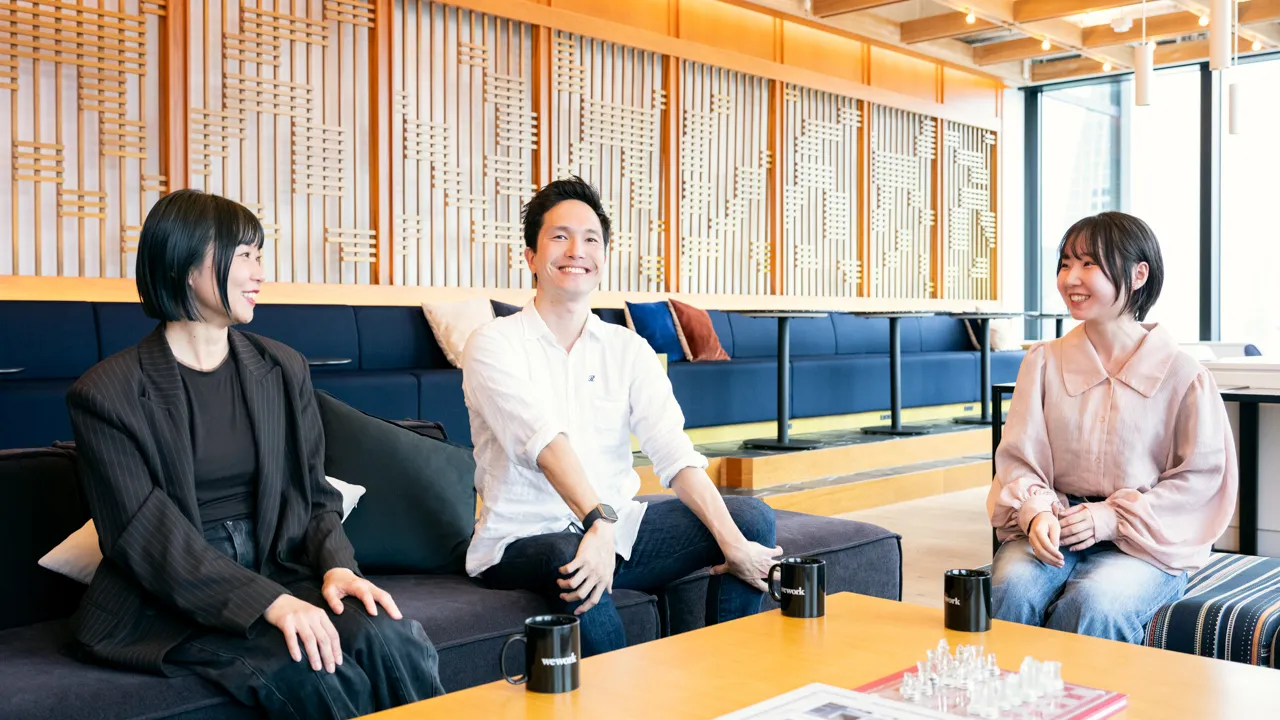
──What do you value the most in your daily work as part of the community team?
Ryuto:When I used to work at a convenience store, I made it a point to remember the items that regular customers frequently purchased and their behavior patterns when visiting the store, so that I could provide proactive service tailored to each individual. I feel that these small efforts naturally led to more conversations and helped deepen my relationships with the customers. At WeWork, I also aim to be a helpful presence while staying close to each individual member.
As a result, mutual trust has deepened, and I have been able to build many relationships where people do not need to hesitate or stand on ceremony, such as by serving as a bridge to create connections between other members. I am working with the belief that this will lead to the creation of an active community that can also foster business development.
Yurina:I feel that is exactly the “fundamental work cycle of a community team” that I realized through the small steps I took over the past year. It starts with greeting members by name with “Good morning” or “Hello,” paying attention to their individual preferences and actions, and valuing proactive support.
Nothing would make me happier than for as many members as possible to recognize me as someone who remembers them and as someone who provides a trigger for their happiness.
Saki:I believe that what the two of them are experiencing is the very value that is created precisely because WeWork brings together such a diverse range of companies and people. And I feel once again that it is the community team that supports that value.
The community team is the "town hall staff," and WeWork is "community building" itself
──How would you explain WeWork to someone who doesn’t know about it?
Yurina:“It is a place where I can do what I want to do, and a place where I can be myself,” I want to convey. That is what I truly felt.
Saki:It is not easy to explain the appeal of WeWork or the multifaceted role of the Community Team. I believe the best way is to have people experience it for themselves. I introduce events that are open to non-members and tell them, “You will understand once you come.”
Ryuto:It is difficult to explain WeWork simply again (laughs). However, while WeWork is often perceived as a real estate business that rents out space, I would like to convey that it is an entirely different entity. The value WeWork provides to its members is the community itself. The community-building taking place at each location can be easily understood if compared to “town development.”
However, just because we say community, it does not mean that one will naturally form simply because people gather. The members who move into WeWork are people who have gathered because they want to enliven the town or community they belong to, and furthermore, they want to pursue their own goals within it; they are, so to speak, active members of a neighborhood association who can move proactively.
People who feel the potential of a town gather one after another, and a sense of bustle is born. In the center of the town, there is a plaza, and various shops line up around it where business is transacted. In the plaza, events like festivals or traditional dances are held, and many people from both inside and outside the area are drawn in by the vibrancy. Our community team acts like local government officials who consult with the members of the neighborhood association to help such a town become more active, making necessary investments to improve the environment and assisting with business growth.
At times, we work as one with the members of the neighborhood association to attract visitors to events, help sell products, or offer proposals, while at other times, we recruit new allies to join us in livening up the town. Also, as time passes, the members who make up the community will change, and there will be systems and facilities that require renewal or customization.
WeWork’s community team constantly thinks about such things, continues to take action, and remains committed to the revitalization of the community. If we were to stop doing that, we might eventually become nothing more than an entity that simply provides workspace.
Saki:Ryuto, your expression of “community development” really resonates with me. I believe the reason I have continued to work at WeWork for over seven years is precisely because of that dynamism.
Yurina: I feel the same way. Through my work on the community team, I have truly come to realize the joy of connecting with people, including our members. I want to continue to make this WeWork community even more vibrant.
*Details as of May 2026